
Loricraft Record Cleaners
click to visit Loricraft
We've all regretted selling products in our audio pursuit, and our Loricraft record cleaner is one that stands out for us.
After years without one, we've returned to the fold for reasons we'll explain below (click here or scroll down).
There's no right answer, and only you can weigh the plusses and minuses for your preferred cleaning system.
The best record cleaner is the one you use.
After Terry and Martina retired, they sold the business to SME, so the Loricraft legacy is in good hands.
Don't underestimate this in today's enviornment where companies fold or produce unreliable products ... not necessarily in that order!
There are two models: the PRC4i and PRC6i which we'll describe below. Both of them share the following design features.
Shown here is a custom dust cover we had fabricated for our PRC4i.
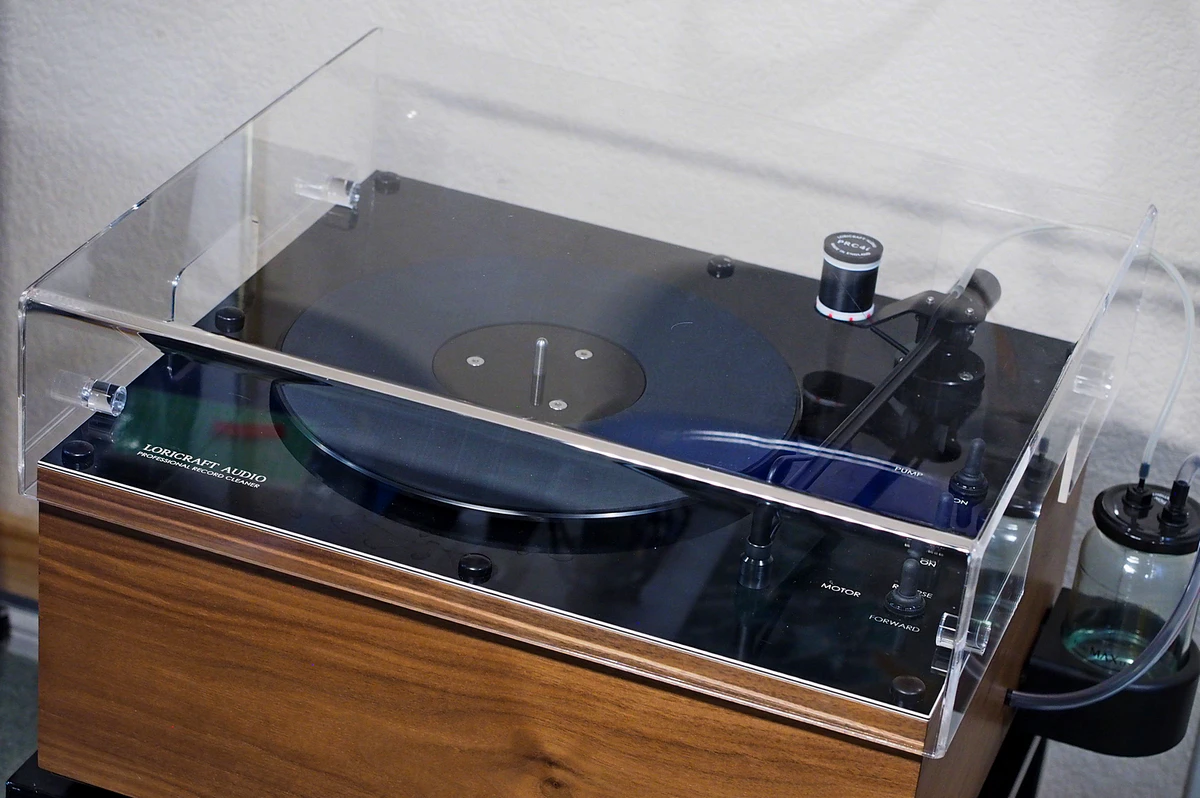
PRC4i with Custom Dust Cover
Shared Features
Point Nozzle:
Loricrafts employ a "point-nozzle" cleaning concept, first introduced by Keith Monks.
A spool of thread is fed through the vacuum arm and creates a space between the nozzle and the record surface. This space creates a vortex to more effectively remove fluid.
No Cross-contamination:
Fresh thread is fed through the vacuum arm for each record side to completely eliminiate cross contamination.
Bi-directional Operation:
To our knowledge, Loricraft machines are the only ones which have reversable platter direction (the Keith Monks machines do not).
Given that a stylus tends to "drive" dirt into the record, we consider this to be a significant design benefit.
Robust Design:
When SME acquired the company, they critiqued the design and made it even more robust.
- The main spindle and bearing are precision made and housed in a robust phosphor bronze case.
- The bearing spindle and motor are designed for long life and provide considerable drive force to the platter to aid the cleaning process.
- The cleaning vacuum arm has precision horizontal and vertical yoke bearings for precise arm movement and is driven across the vinyl record by a custom made gearing system.
- The vacuum arm yoke bearings are the highest grade and designed to prevent ingress contamination from cleaning fluids.
Quiet:
These are the quietest machines we've ever used. Don't underestimate this feature.
Finish:
Both models are available in either black oak or faux walnut finishes.
Prices are subject to change without notice due to fluctuating market conditions and at manufacturer's discretion.
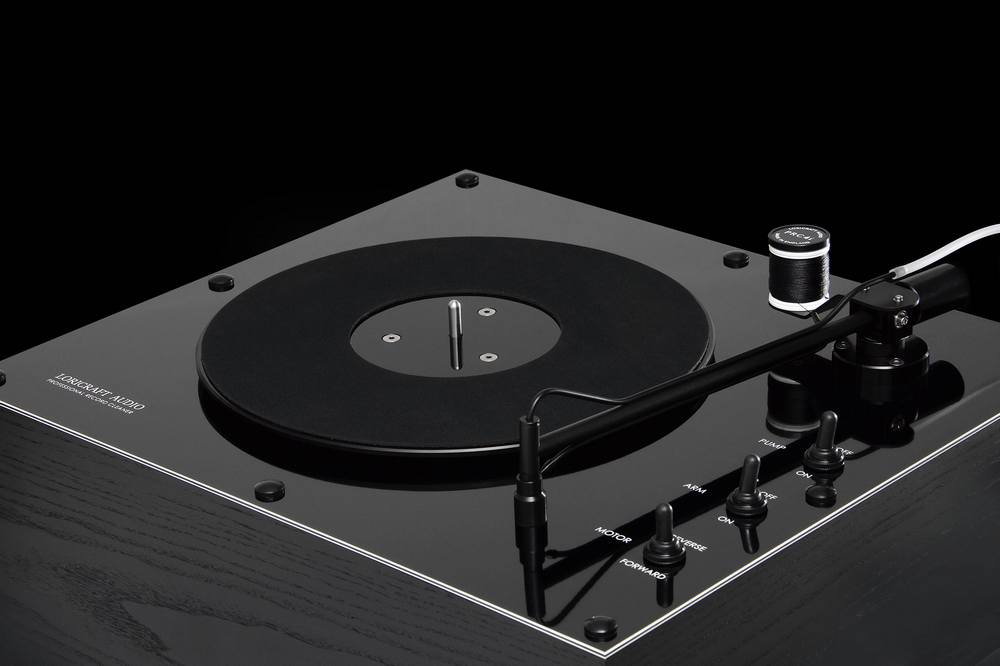
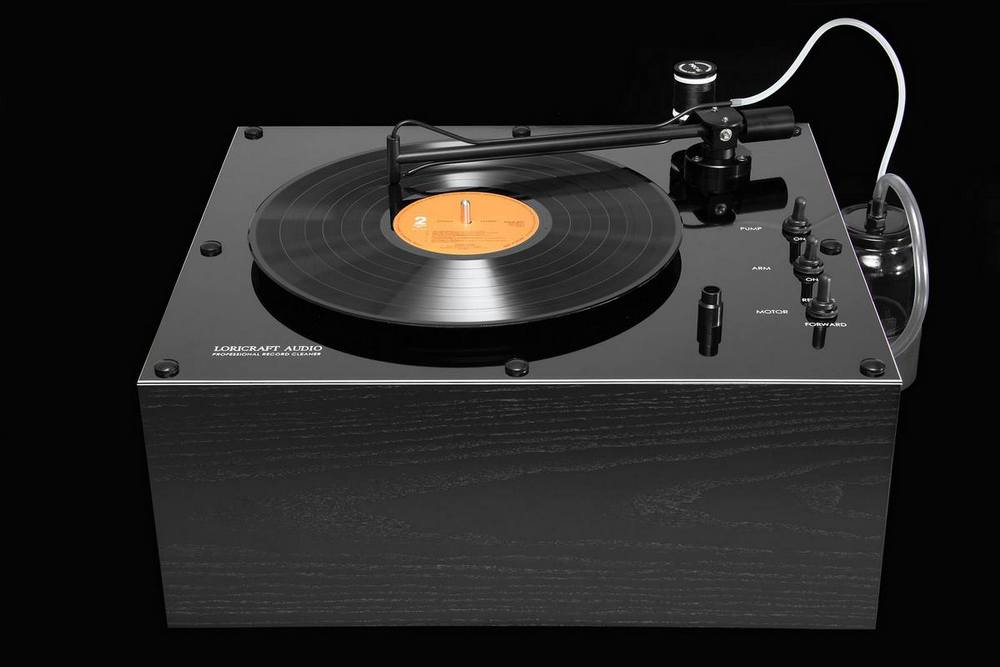
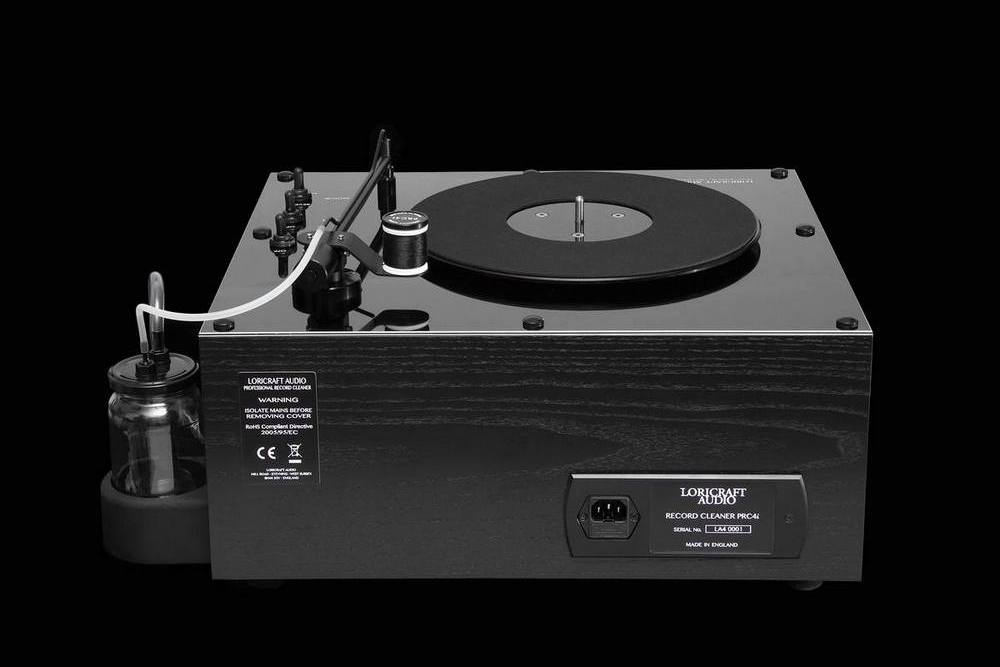
PRC4i - $4,995
click to expand
The PRC4i's pump extracts fluid at a rate of 28 liters per minute.
A drying cycle takes about 80 seconds.
Dimensions: 21.7"w: x 16.2"d x 10.75"h
Weight: 33 Lbs.
click to expand
click to expand
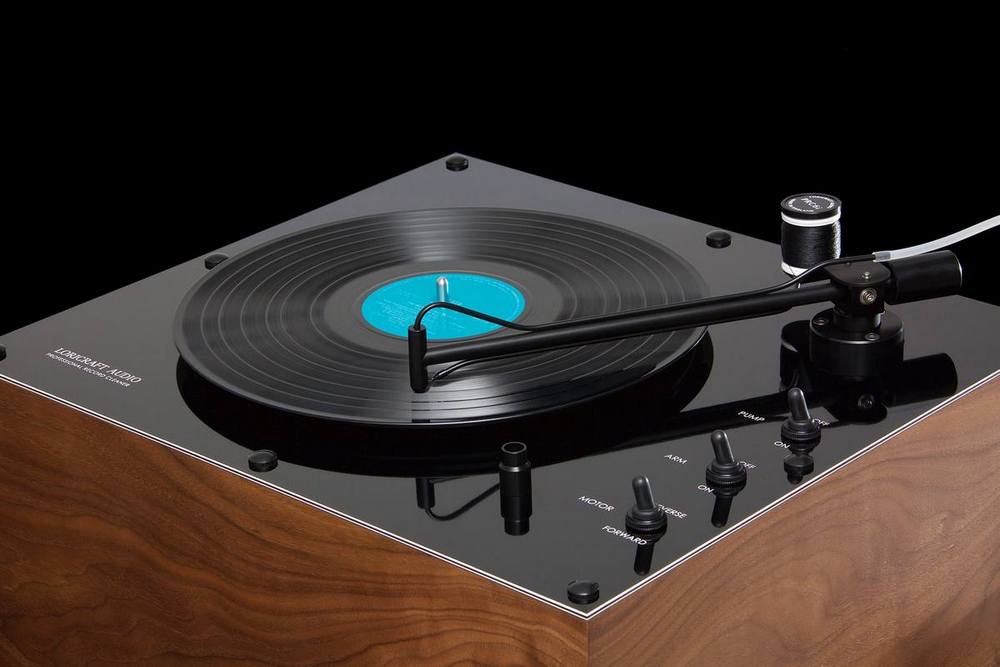
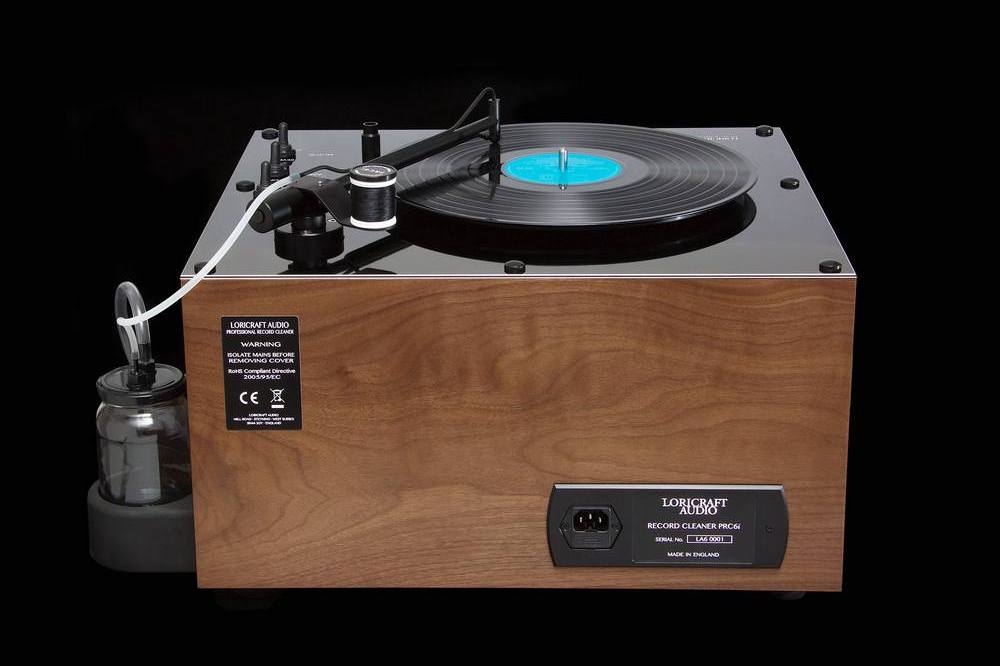
PRC6i - $6,995
click to expand
The PRC6i differs from the PRC4i in the following ways:
It is 7dB quieter than the already quiet PRC4i.
This is achieved by combination of a specially developed vacuum pump and the use of high-density noise absorption foam inside the casework.
To accommodate these changes, the case is about 2" taller than the PRC4i
The medical grade pump capacity is 18 liters per minute.
Dimensions: 21.7"w: x 16.2"d x 12.7"h
Weight: 38.2 Lbs.
click expand
click to expand
Why Loricraft?
There's much to be said for one-step ultrasonics which gained popularity in the past decade. They do a very good job, but the process may not be as simple as advertised.
If you read various forums, you'll encounter conversations about using a three-step process:
- Pre-clean with a vacuum-based machine
- Ultrasonic cleaning
- Distilled water rinse
Suddenly, a one-step workflow expands to three, with the possibility of employing at least two machines!
Many have taken to using a second, inexpensive ultrasonic for the final rinse step while others use the vacuum machine they used for the pre-clean.
So much for simplicity.
We escaped those loud, wand-based vacuum-based machines (the ones that send you cat or dog into another room) - first for a Loricraft (which is very quiet) and then for the promise of "quiet" of ultrasonics.
Ultrasonics are not as quiet as you'd expect, especially the ones which use fans to dry the records. Also, we question whether extended listening to a 40 or 80 kHz drone affects your hearing. At a minimum, most individuals find these machines annoying and place their units in another room.
The annoyance factor is individual, but what attracted us to Loricrafts in the first place, holds true today. Loricrafts are the quietest machines we've ever used. You may not want to listen to music while the machine is cleaning in your room, but it's the next best thing.
You'll read about fluid contamination in your ultrasonic, and there are endless debates about adding 1 micron filters, changing water frequently, along with the potential for adding a second ultrasonic to perform the rinse.
The mind boggles.
With wand type vacuum cleaners, the question arises about cross-contamination of the wand after you've cleaned those garage sale finds (or a given number of records from any source).
A "point nozzle" machine like the Loricraft addresses these issues. The thread buffer interface presents a fresh contact surface to each and every record side. There is no cross-contamination between record sides.
Clean ... rinse ... DONE!
Not to introduce unnecessary FUD (fear, uncertainty, doubt) into the equation, but how are you going to service that expensive ultrasonic when the time arrives (and it eventually will arrive)?
The Loricraft machines use medical grade pumps - old school technology that you can service yourself.
Assuming you ignore the multi-step protocol for ultrasonics we outlined above, the workflow for a mechanical, vacuum-based cleaner requires a bit more attention, and this single feature that may discourage you from using one.
The playing field is leveled however, if your ultrasonic workflow adds either a pre-clean or a rinse step.
As we wrote above, there's no right answer, but after years away from our trusty Loricraft, we've returned, and we're glad we did!
Which Fluids?
We've used both Loricraft's L'art du Son solution as well as the excellent Audio Intelligent solutions.
The A-I process we used was a 3-step one: an Enzymatic clean, followed by their Premium Archivist formula, and lastly, a distilled water rinse.
The L'art du Son is a two-step process: clean, then rinse.
We found the L'art du Son to be equally effective as the 3-step A-I process.
We understand that a key benefit of the A-I chemicals is their Enzymatic step for cleaning records with with visible mold. If a record has mold on it, I dread to think of the jacket, and we wouldn't let anything with that much mold in our house.
Given our use-case, the L'art du Son solutions have served us well.
