
click to expand
With apologies to Wayne Gretzky ...
Wayne Gretzky was quoted as saying: “you miss 100% of the shots you don’t take”.
With respect to cleaning machines, the best machine is the machine you actually use.
I’m reminded of cameras, where a similar rule applies: it doesn’t matter how good your camera is if your rig is so heavy that you rarely carry it.
So you purchased that great, full frame camera, along with the “holy trinity” of zoom lenses (12-24, 24-70, & 70-200), weighing in at some 25 pounds.
How often will you carry that camera bag around?
In our experience, there are two key “impediments” to cleaning your records: noise and the labor committment.
Noise and Labor Committment
After the first few cleaning “sessions”, when the thrill of a new product wears off, it may be a very long time before you clean any more records if the process is too complicated or the machine is too noisy.
Some machines and processes are more labor intensive than others. One person's drudgery is another person's ritual.
Some machines are so irritatingly noisy that users banish them to another room or a closet.
The better, high power ultrasonic cleaners emit a "whine" which disturbs some individuals.
Noise is subjective, and I won’t name names, but many of the wand type based vacuum cleaners are beyond my noise tolerance level – especially when the urge strikes to clean a record during a late night listening session.
Everyone is different in this regard, and unfortunately, this annoyance only becomes apparent in the long term – after the purchase.
Mechanical Cleaning - Vacuum Machines with "Cleaning Slot" Suction
Machines which remove cleaning fluid with vacuum through a cleaning wand or slot (VPI, Clearaudio, Nitty Gritty, etc.) require quite a bit of user interaction, especially when a rinsing step is involved.
In general, these machines are noisiest.
The cleaning pads on these slots cross-contaminate records. Some wand-based machines have interchangeable wand assemblies with users dedicating a separate wand for cleaning and rinsing steps. This minimizes but doesn't eliminate cross-contamination.
Point Source Vacuum Machines
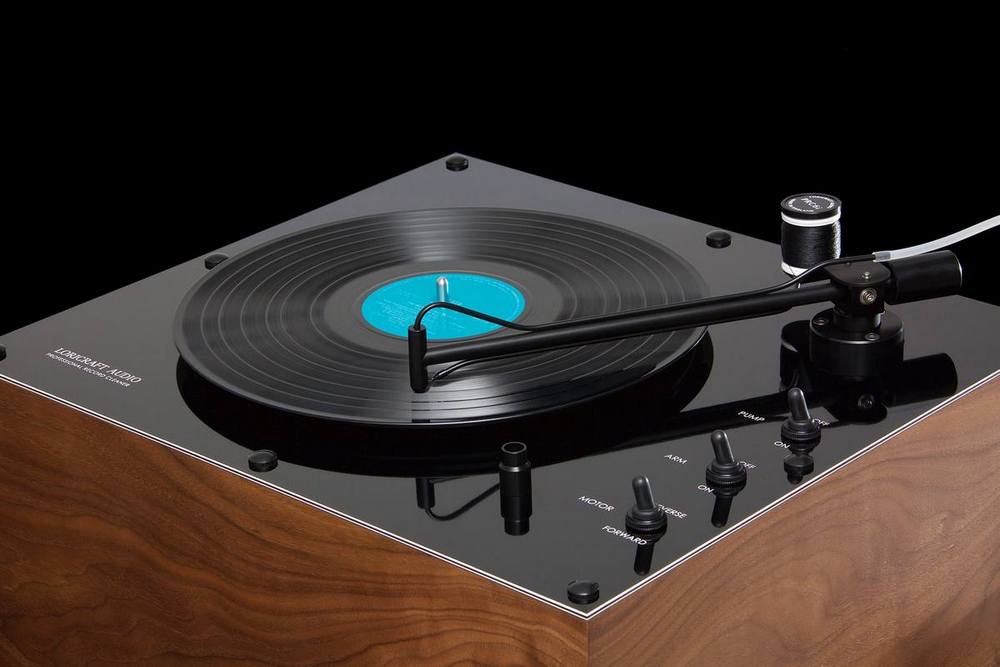
These include the Loricraft and Keith Monks machines.
Their claim to fame is twofold:
- complete avoidance of cross-contamination between records
- the lowest noise of any cleaners in the market
Don't underestimate the noise factor. They are very quiet.
As with other vacuum-based machines, the cleaning process is labor intensive.
Automated Ultrasonics
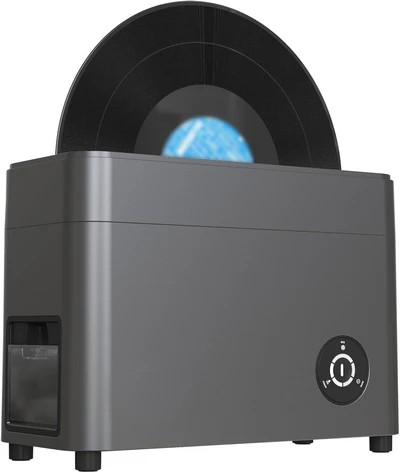
Machines like the Degritter and KLAudio do a very good job. You pay handsomely for this convenience.
Many individuals can't leave well enough alone - complicating matters in an attempt to minimize bath pollution and cross-contamination.
They will employ second cleaner of some sort - either a vacuum machine or an inexpensive ultrasonic to run a rinse cycle with distilled water. The space and time committment adds up.
For extremely dirty "garage sale" records, a pre-clean is recommended to remove the major dirt and oils and minimize contamination of the ultrasonic tank. Some individuals use a vacuum-based machine for this purpose.
Some users will install industrial, 1-micron filters on machines with enough space to implement them.
The drying fans are noisy.
Inexpensive Ultrasonic Systems
Systems like the Hummingru, Vevor, and Kirmus come to mind.
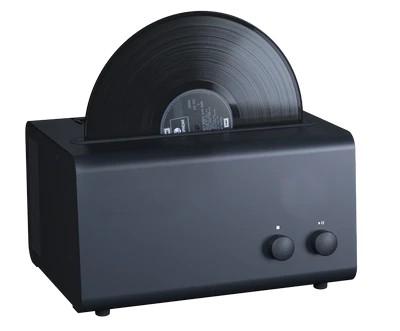
They're a bit more labor intensive than the fully automated ultrasonics and are purported to do a good job. Record drying with the Kirmus is manual. The Humminguru has drying fans.
DIY Ultrasonic Systems
This category involves purchase of an industrial tank. A dedicated skewered racking system is required (much like the one supplied with the Vevor). Several companies make products for this purpose.
In general, some sort of manual drying method is required - either wiping with a microfiber cloth, fan drying, air drying, or using compressed air.
Cleaner Vinyl sells various racking systems - some of which include a fan drying option as well as a filtration system. Kuzma developed a cleaning system and recommends the Elmasonic tanks.
If you have time, here's a link to an extensive thread on DIY solutions.
If you really want to go down the rabbit hole, check Neil Antin's detailed treatise on record cleaning and chemicals. Neil was engineer in the U.S. Navy, and was responsible for implementing precision cleaning techniques.
Tanks run from $125 tanks like the one sold with the Vevor system (above) to industrial tanks like the multi-frequency, $2,000 Elmasonic P60H and beyond.
The only drawback to these systems is setup time. Unless you have a space dedcated to this process, you’re not likely to clean a record in the middle of a listening session with this system.
Think of these as machines for a batch cleaning project.
If you just came back from a garage sale/record store with 100 records, this process can be efficient. You need to be willing to set aside time and space, however. Here's the process:
- Lay out a drying area
- Clean a batch of 3-10 records (depending on tank size and cleaning system)
- Dry the records using one of several techniques
- Put everything away

