
Motor Drive FAQs

Drive System
Introduction
This FAQ address our drive system design as it applies to Galibier turntables, as well as questions relating to drive system retrofit / upgrades for turntables from other manufacturers.
Pitch stability (wow and flutter performance) is only the first of many hurdles that a drive system design needs to clear.
The influence of the drive system on vinyl playback was perhaps best stated in this old review of the Rockport Sirius III turntable (opens in a new tab).
The review is rather long-winded, but the first 600 words or so should be required reading for anyone who's considering a change to their vinyl front end - whether it be a turntable, a tonearm, a cartridge, or any other element in the vinyl playback chain.
If you don't have time to read it, scroll down to the first FAQ on this page "Why Upgrade ..." (or click this link to jump down to it"), where we summarize the key points from that review.
Our Design Philosophy
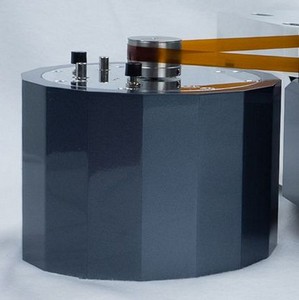
- Our high torque motor runs at high speed, rendering better dynamic response.
- Drive belts matter.
- Decoupling the drive from the platter (suspended turntables) is the enemy of speed stability.
- We drive our platters with one motor, because if you couldn’t get it right with one motor, what makes you think you can get it right with two or three?
A few relevant blog posts:

About Speed
The Details

Drive Belts-1

Drive Belts-2

Timeline
Frequently Asked Questions
Some of these questions arose during conversations with owners of other turntables who were upgrading to our Galibier drive, but the same points apply whether you're considering purchase of a Galibier or are upgrading a turntable from another manufacturer.
Why upgrade? I have good wow & flutter readings
Belt Height and Custom Motor Pods
Warranty and Unauthorized Power Supplies
Why upgrade? I have good wow & flutter readings
It’s about much more than pitch stability. In short, the enemy is distortion.
That cartridge you thought was a bit too edgy? It may well be the messenger you’re blaming. The true culprit may be your drive system.
In fact, we’d go so far as to say that until you’ve optimized your drive system, considering an expensive cartridge upgrade is a very risky proposition.
Good wow and flutter behavior is necessary, but there’s so much more to good speed behavior than perceived pitch stability. Wow & flutter readings are taken with a steady sine wave (typically 3150 Hz), and this tells you very little about the distortion spectra or dynamic behavior of your analog front end when playing back complex wave forms (otherwise known as music).
The next level of refinement brings with it a reduction in distortion and improved phase behavior which is most noticeable in the treble because of the short wavelength at these frequencies.
This in turn results in dense, rich, palpable harmonics which are most apparent in how strings and woodwind instruments are rendered.
These uppper frequencies are responsible for the overtone structure which is is how we distinguish two different instruments from each other when they’re playing the same note (i.e. double bass vs. organ).
Better speed control means better tone. Is accurate rendering of tone important to you?
The improved phase behavior also results in better note definition, tracking of leading and trailing edges of the note, improved rhythm/timing, as well as delineation of interleaing musical lines.
In short, the music makes more sense.
About Drive Belts
We've changed out tune.
In our first two decades of operation, we specified rigid belts fabricated from materials like Mylar, Kapton as well as a woven blend of cotton and polyester (saturated in neoprene).
We found these rigid belts to have better better speed stability and improved transient response when compared with rubber belts.
The upside as well as downside of these belts mirrored the attributes of idler drives: more immediacy (transient response) at the expense of slightly more noise transmission.
Our sophisticated platter design mitigated the noise issue, and these belts blurred the distinction between idler drive turntables and our designs.
Experiments in 2025 are pointing us toward adding the slightest bit of compliance to our drive belts - nothing so lossy as a typical rubber drive belt, but not quite as stiff as what we we previously specified.
We're receiving favorable responses from our customers - individuals who hold transient response in the same high regard we do. We are unwilling to sacriifice immediacy and timing.
We appreciate the virtues of idler and direct drive systems, but this doesn't mean the same results can't be achieved with a properely designed belt drive.
Belt Height and Custom Motor Pods
This question relates to individuals who are performing a drive retrofit / upgrade to a turntable from another manufacturer, or in the unlikely circumstance where they have installed custom footers under their Galibier turntable base.
Custom height motor pods are impractical to manufacture in advance (by brand and model) as the height permutations vary too much. We can however, manufacture motor pods of almost every height.
It’s the rare platter height that we cannot accommodate. Typically, this involves a turntable, with the belt center-line being lower than about 4.5 inches above the shelf. Of course, you can raise your turntable base with custom footers to circumvent this limitation.
As far as specifying the "ride height" of the belt on a non-Galibier turntable, we recommend that your new motor pod position the belt at the same height as the “stock” design.
Belt "ride height" is a key part of any turntable design, and since we have no insight into either the design principles or execution of your turntable, we recommend that you don't change it.
Our Galibier turntables are designed to locate the belt height for theoretically maximum stability (minimizing rocking).
If you're interested in reading more about the theory, we cover this in our bearing FAQ.
The short story is, that in our experiments, we found the level of precision to which our bearings are executed, renders our platters immune to any rocking. Having said that, our platter and bearing design still follows design principles to mitigate this theoretical effect.
International Voltages
For our Mark I and Mark II turntables, we specify the Teddy Pardo power supply which is made in Israel, and can be specified for either North American voltages (120V / 60 Hz) or for 240V / 50 Hz.
We will be specifying a different linear supply for our Savoie drive turntables and will update the power supply page with that information.
Warranty and Unauthorized Power Supplies
We will not warranty a controller which has been used with a power supply we have not certified for use with our drive circuit. Currently, the Teddy Pardo 12/4, the discontinued Tenma, and the current Astron RS-7A supplies are certified.
Contact us if you have any questions, and if you purchase your power supply directly (not through us), forward us a copy of the receipt to keep your warranty in effect.
While be build protection into our power supplies, we have seen 2 failures from use of unauthorized supplies.
You would never knowingly put dirty gasoline in your Porsche, so why would you feed your Galibier controller dirty power?
Suspended Turntables
Suspended turntables were developed to isolate motor noise from the bearing. They're typically matched with rubber belts and hysterisis effects of these two springs interacting compromises speed stability.
Should I lock down the suspension on my Verdier?
Try it and tell us what you think.
Consistent with our design concepts and musical values, we’re firm believers in improving drive system coupling whenever possible, and we wrote the following comment in a forum post about Platine Verdier turntables:
My comment about locking down all suspension related to the resonant loop comprised of the motor drive, the “belt”, and the base/platter. Subtle relative movements between the drive components can affect speed stability on the “micro” level I described earlier.
In this sense, any suspension in the loop, whether it be some “squishy” footers under the drive system, or springs under the turntable base/platter will have similar effects to that of a rubber belt.
The good news is that suspension under a fairly massive base like that of the Verdier is likely to have a smaller effect than that of a rubber belt due to the platter/base assembly being high mass, and will “jiggle” quite a bit less (much less so than for example, a Linn turntable).
It will still “jiggle” however, and when you consider the minute wavelength of a 10 kHz signal in a record groove, and then take into account that any error more than zero will introduce phase anomalies, you’ll understand why we take this so seriously.
You may well find the solution for your turntable to lie on a continuum – that a bit of compliance will be the best compromise in your system. In general, I fall into the camp that less (suspension) is more (fidelity).
Some of this has to do with musical values – your perceptual framework and what in a musical performance your attention is drawn to. We’re all different in this regard. I tend to listen to a lot of rhythmically complex music with interleaving musical lines, so dynamic behavior (and unraveling these musical lines) is important to me. Of course, benefits like lowered distortion are a universal value.
My take is that when the urge to experiment strikes (and we all know that it occurs frequently with Verdier owners <grin>) that you play with locking down your suspension. It is reversible after all.
Platine Verdier Turntables
We receive quite a few inquiries about Verdier turntables.
The most frequent Verdier height dimension we’ve encountered positions the center-line of the drive belt so it is 7.5” (190 mm) above the turntable shelf.
We have seen a variance in this number due to the wide use of aftermarket footers under the base and motor pod, however. The reported belt height (to position it at the same height as the “stock” turntable) has ranged from 7 to 8 inches.
We can accommodate any height, but because of these variances, Verdier motor pods cannot be inventoried, and require a custom height motor pod.
Refer to the “Belt Height" question on this page.
Redpoint Turntables
Of course, we have a history with Redpoint. At one point the key dimensions of our motor pods were cross-compatible, allowing us to retrofit drive systems with no modifications.
Over the years, our dimensions have diverged, although many Redpoint motor pods were close enough to be adapted by expanding the internal cavity to accommodate our electronics.
With the release of our new Savoie drive in 2026, a new motor pod is mandated.
